How to wash muslins and baby blankets so they stay soft for years
Nobody warns you about the washing.
You expect the sleepless nights. You expect the nappies. What you don't quite expect is that the washing machine becomes the hardest-working member of the household, and that muslins become some of the most-washed things you own.
The good news is that well-made organic cotton muslins are made for exactly this. With a few simple habits, they stay soft, fresh and lovely to use for months, and often long enough to hand down. Here's what helps, including what we've learned from parents who've put our muslins and blankets through months of daily washing.
How do you keep muslins soft?
Three small habits make the biggest difference:
- Use a little less detergent than you think. Muslins have a light, open weave, so a small amount goes a long way and rinses out cleanly.
- Add an extra rinse. Especially if you live in a hard water area, an extra rinse helps cotton feel its softest.
- Shake, then dry in the fresh air. Give each muslin a good shake before hanging it out. A breeze, or a short tumble on low if the label allows, keeps the fibres light and soft.
That's it. Do these, and your muslins will feel softer with every wash. As one parent told us, ours "stayed super soft even after 8 months of constant washing."
Should you use fabric softener on muslins?
It's tempting, but it's best to skip it. Fabric softener coats the fibres, which makes muslins less absorbent. That's the opposite of what you want from something designed to catch milk and dribble. Softeners are also often heavily fragranced, which some parents prefer to avoid near a newborn.
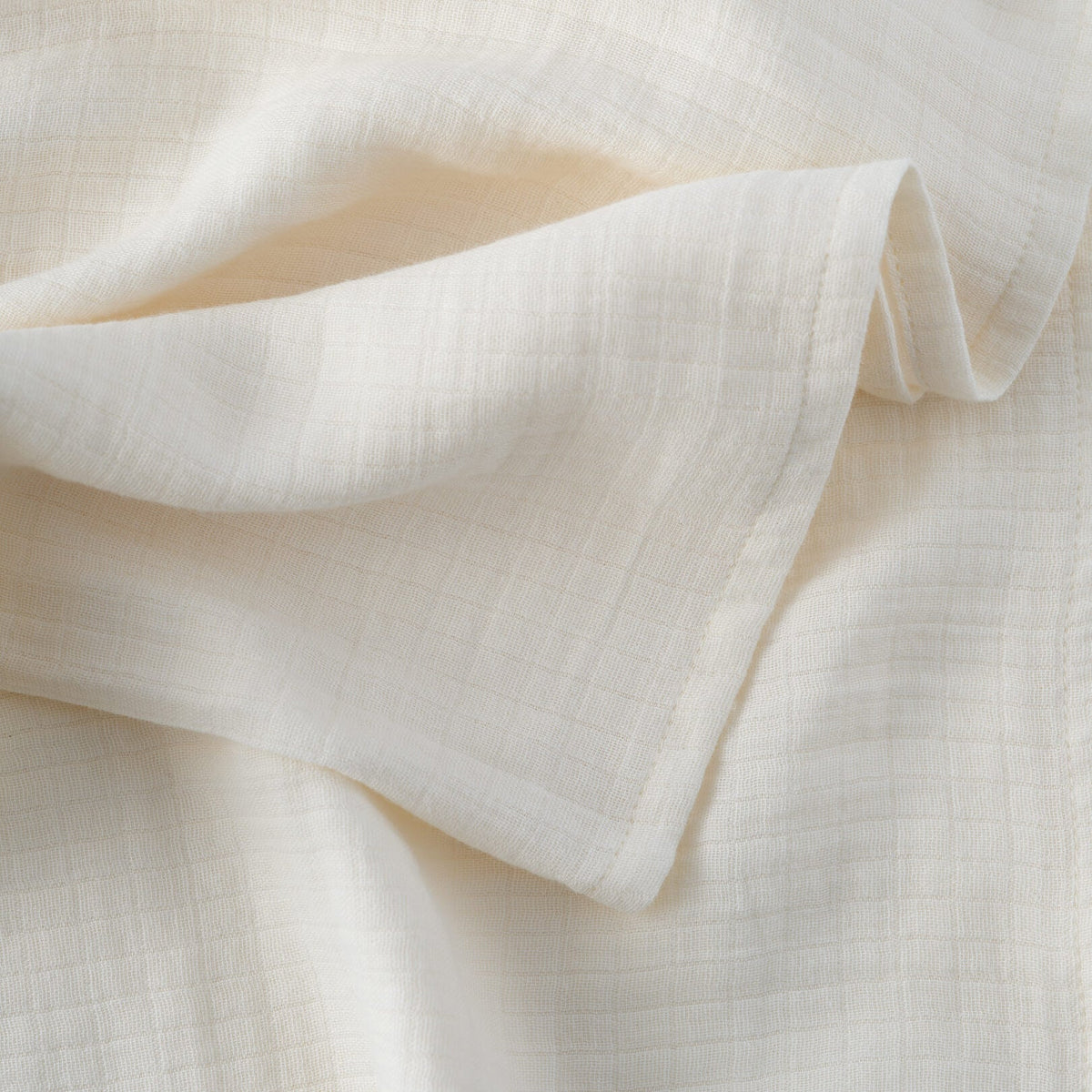
Good-quality cotton doesn't need it. The softness comes from the cotton itself, and it builds naturally with washing.
Should you wash muslins before using them?
Yes. A wash before first use freshens muslins and blankets after packaging and transport, so they're ready for your baby's skin. From then on, they get softer with every wash.
Why size matters: room to wrap, drape and tuck
One of the phrases parents use most in our reviews is "great size." It matters more than you'd think.
Our muslin swaddles are a generous 120 x 120cm, which gives you plenty of fabric to:
- Swaddle securely, with enough length to tuck in neatly (always following safer sleep advice)
- Lay out a clean space on a changing mat, a sofa or a friend's floor
- Use as a light layer for tummy time or a quick change on the go
- Cover up during feeds, if you'd like a little privacy
- Wrap a gift, so the wrapping becomes part of the present

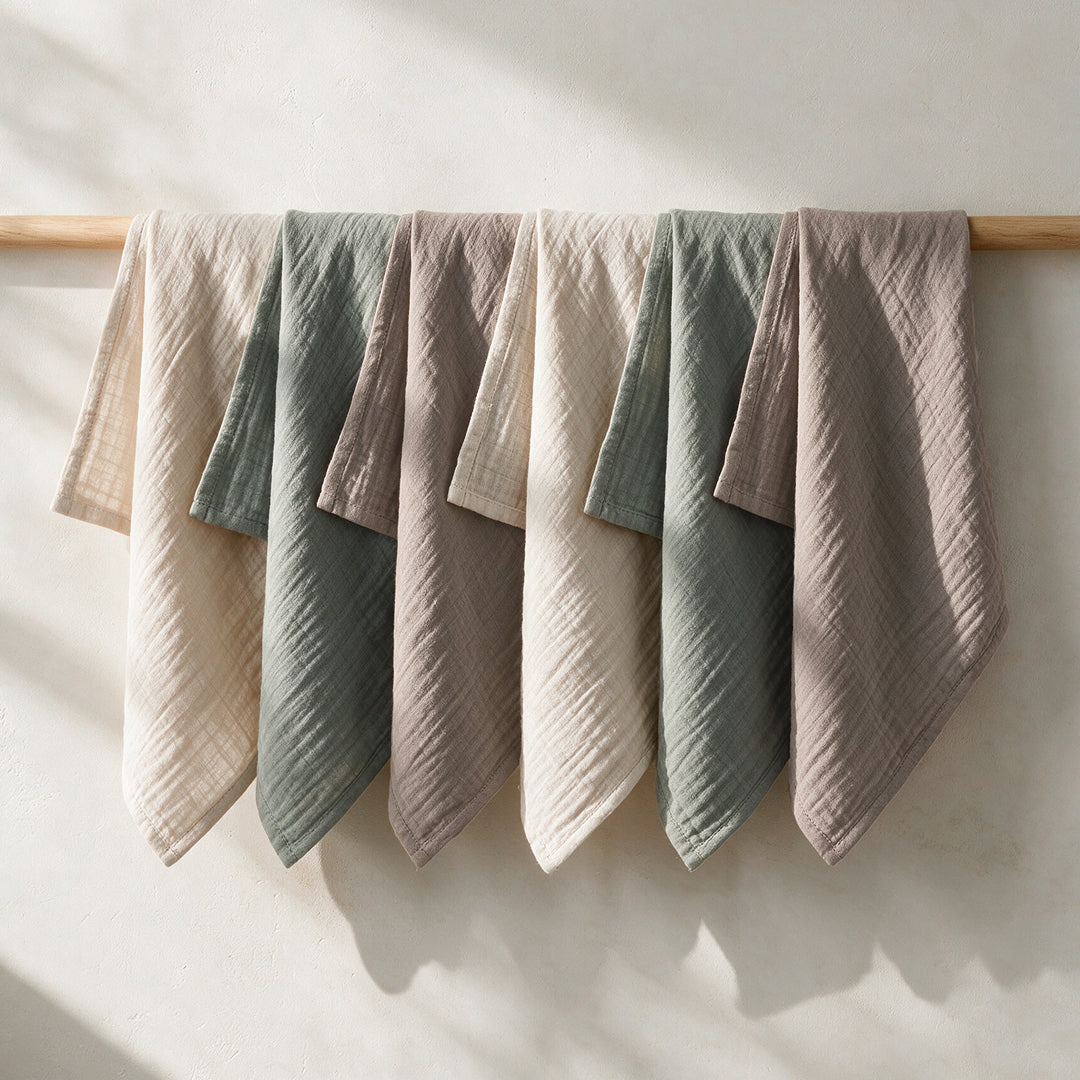
To keep them looking their best, smooth them out while damp and hang them by the corners or fold them over a line. They'll dry flat, even and ready to use.
How to wash muslins and cellular blankets: the simple routine
You don't need special products or a complicated routine. This is all it takes:
- Check the care label. Always your starting point.
- Rinse first if needed. Milk and poo stains come out best with a cold rinse before washing. Hot water can set protein stains.
- Choose a gentle detergent. Many parents prefer a fragrance-free, non-bio detergent for baby things.
- Use less than you think. Especially with muslins.
- Don't overload the machine. Muslins and blankets need room to rinse properly.
- Skip the fabric softener.
- Line dry where you can, ideally outside. Tumble dry on low if the label allows.
- Give them a shake before drying to help them stay soft.
How to get stains out of muslins
Milk, sick and the occasional poo explosion are part of life with a baby. A few tips:
- Act quickly and rinse in cold water before the stain dries.
- Soak stubborn stains in cold water with a little detergent before washing.
- Try sunshine. Drying Cream or Cloud muslins outside in natural light can help fade stains. It's an old trick, and it really does help.
- Skip the bleach. It isn't needed for baby textiles, and gentle care keeps the cotton at its best.
Washing organic cotton: is it any different?
Not really. Organic cotton washes just like conventional cotton, so the same simple routine works: gentle wash, no softener, line dry when you can.
The difference is in what went into it. Our muslins and blankets are made from 100% GOTS certified organic cotton, so the whole journey, from the field through to dyeing and finishing, has been independently checked, including the chemicals allowed along the way. They're OEKO-TEX certified too, meaning the finished product has been tested for harmful substances. That's a nice thing to know about something that sits against your baby's skin every day.
How to store blankets and muslins to hand down
If you're hoping to keep a favourite blanket for a younger sibling, or as a keepsake, a little care before storing helps:
- Wash and dry completely before putting away, so they stay fresh.
- Store in a breathable cotton bag or pillowcase rather than plastic, which can trap moisture.
- Keep somewhere cool, dry and dark so the colours stay lovely.
- Give it a fresh wash before using it again.
One parent told us they'd had their muslins for ten months and "after many washes they look the same." That's what we design for: things that last long enough to be handed down.
Knitted blankets: a little extra care
Our knitted blankets are a generous 75 x 95cm of organic cotton knit, made to be used every day and kept for years. A gentle touch keeps them at their best:
- Use a gentle cycle at a low temperature, if the label allows
- Pop it in a laundry bag so the knit doesn't catch on zips and poppers
- Dry flat, smoothing it into shape, so it stays beautifully even
- Store folded, not hung, in a cotton bag

The short version
- Use less detergent, add an extra rinse, and skip the fabric softener
- Wash before first use
- Rinse stains in cold water first
- Line dry and give everything a good shake
- Store clean, dry and in cotton, not plastic
Look after them, and your muslins and blankets will look after you, for this baby and maybe the next.
Shop our organic muslins, swaddles and blankets →
FAQ
How do I keep muslins soft?
Use a little less detergent, add an extra rinse, skip the fabric softener, and give them a good shake before line drying. Good-quality cotton muslins get softer with every wash.
Should I use fabric softener on muslins?
It's best not to. Fabric softener coats the fibres and makes muslins less absorbent.
What temperature should I wash muslins at?
Always follow the care label. Many parents wash baby muslins at 30–40°C for everyday loads.
Do muslins get softer with washing?
Good-quality cotton muslins do. The open weave relaxes with use, so they tend to feel softer after every wash.
Can I tumble dry muslins and cellular blankets?
Many can be tumble dried on low, but check the care label. Line drying in the fresh air is the gentlest option and keeps them feeling soft.
What size are your muslin swaddles?
Our muslin swaddles are a generous 120 x 120cm, with room to swaddle, use for tummy time, cover up during feeds or wrap a gift.
How do I wash a knitted baby blanket?
Use a gentle, low-temperature cycle if the label allows, wash it in a laundry bag, and dry it flat. Store it folded in a cotton bag.