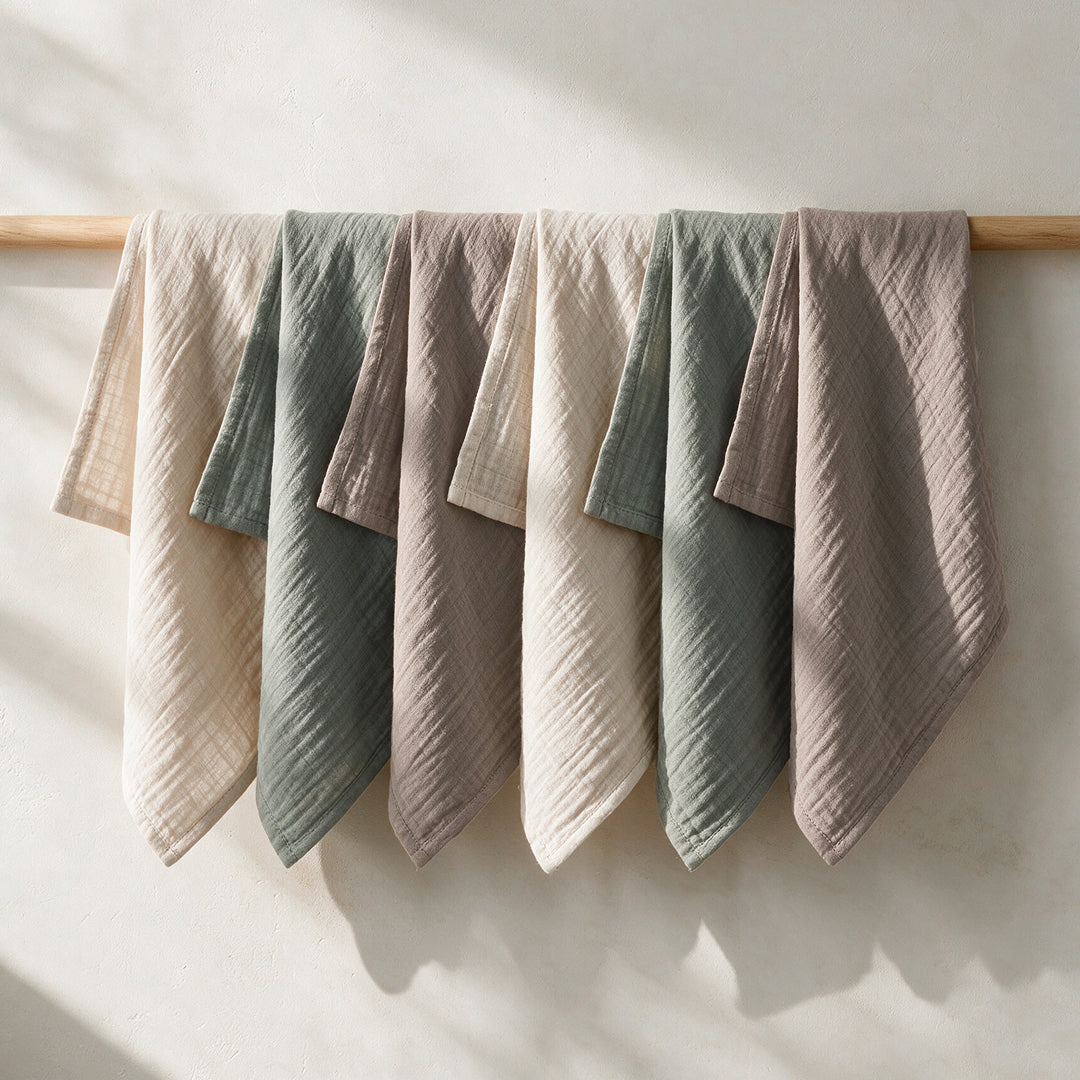
Cellular blankets: what nearly 9,000 parents have taught us
There's a particular kind of product review we've come to love. It usually starts with something like "wasn't expecting much, but I was wrong."
Our organic cotton cellular blankets have close to 9,000 reviews now. That's a lot of parents, a lot of 3am feeds and a lot of washing machines. Read enough of them and patterns start to appear: how many blankets people actually need, where they end up using them, and what they wish they'd known sooner.
So rather than write yet another guide from scratch, we thought we'd share what those parents have taught us.
First things first: what is a cellular blanket?
A cellular blanket is a lightweight cotton blanket with an open, honeycomb-style knit. The small holes, or "cells", let air circulate, so the blanket keeps your baby comfortably warm without trapping too much heat. That's why they've been a favourite in UK hospitals and nurseries for generations.
Simple, breathable and easy to layer. That's really all there is to it. Where it gets interesting is how parents actually use them.

Lesson one: you'll use it far more places than you think
Most people buy cellular blankets for the Moses basket. Then something happens. The blanket starts following the baby around.
It goes in the pram for the first walk. It's over their legs in the car seat on the way to see grandparents. It's on the sofa for a sleepy afternoon feed, on the floor for tummy time, and tucked in the changing bag "just in case."
That's why size matters more than people expect. One of the words that comes up again and again in our reviews is "large." A blanket around 75 x 95cm is big enough to tuck securely into a Moses basket or pram, but still easy to fold into a bag.
Lesson two: how many cellular blankets do I need?
Here's the honest answer from parents who've been there: two to four.
- One in use
- One in the wash
- One spare for the nappy leak, the milky moment or the blanket you left at your mum's
If you'd like one to live permanently in the pram or car, four gives you breathing room. Much more than that, and they'll sit in a drawer.

Lesson three: they get washed. A lot.
Parents don't just use cellular blankets. They wash them constantly. Alongside softness, one of the things reviewers mention most is how the blankets cope with the washing machine: whether they shrink, bobble, fade or go stiff.
It's one of the biggest worries when you're choosing baby textiles, and it's the one thing a product photo can't show you. So when you're comparing, it's worth looking past the pictures and reading what parents say after a few months of use.
We've written a whole guide on how to wash muslins and baby blankets so they stay soft, because it matters so much.
Lesson four: the good ones get handed down
This is our favourite. One parent wrote:
"I initially bought two two-packs when I had my first baby 2.5 years ago, and I was so impressed that I purchased another two two-packs when my second one was born."
Cellular blankets are one of the few baby things that aren't outgrown. The same blanket that went home from hospital can be on the sofa years later or tucked around a little brother or sister. When you're choosing one, it's worth thinking about whether it will last that long.
Lesson five: parents want to know what it's made of
Some parents tell us in their reviews that organic really matters to them. It's often less about a label and more about peace of mind: this is the thing that sits right against their baby's skin, every day.
Our cellular blankets are made from 100% organic cotton, certified to GOTS (the Global Organic Textile Standard), which means the cotton has been independently checked from the field right through to the finished blanket. They're also OEKO-TEX certified, meaning the finished product has been tested for harmful substances. If you'd like to know more, we've explained what GOTS certification means in plain English.
How to use a cellular blanket safely
This bit isn't from our reviews. It's from The Lullaby Trust, the UK's safer sleep charity, and it's worth knowing by heart.
- Feet to foot. Place your baby with their feet at the foot of the cot or Moses basket, so they can't wriggle down under the blanket.
- Tuck it in firmly, no higher than their shoulders.
- Don't fold it double. If your baby needs more warmth, add a layer rather than doubling one up.
- Keep the room at 16–20°C.
- Keep the cot clear. No pillows, bumpers or soft toys.
- Check your baby's chest or the back of their neck to see if they're too warm. Cool hands and feet are normal.
- No weighted blankets for babies under one.
In the car seat, strap your baby in first and lay the blanket over the harness, never underneath it.
In the pram, tuck it around your baby rather than draping anything over the pram itself, which can trap heat.
If you're ever unsure, your health visitor is the best person to ask. The full guidance is at lullabytrust.org.uk.
Cellular blanket or sleeping bag?
Many parents have both. A well-fitting baby sleeping bag is a great choice for night-time sleep, and if your baby is in one, they don't need a blanket in the cot as well.
The cellular blanket is the one you'll reach for everywhere else: the pram, the car seat, the sofa, the play mat. It's often the first thing parents use and the last thing they put away.
The short version
- A cellular blanket is a breathable, open-knit blanket that's easy to layer.
- Two to four is plenty for most families.
- A generous size makes it more useful.
- Choose one that washes well, because it will be washed often.
- Always follow safer sleep guidance: feet to foot, tucked in no higher than the shoulders.
And if you end up buying more for baby number two, you'll be in very good company.
Shop our organic cellular blankets →
FAQ
What is a cellular blanket?
A cellular blanket is a lightweight blanket with an open, honeycomb-style knit. The small holes let air circulate, which helps keep babies comfortably warm without overheating.
How many cellular blankets do I need for a newborn?
Most parents find two to four is plenty: one in use, one in the wash and a spare.
Are cellular blankets safe for newborns?
Yes, when used following safer sleep guidance: feet to foot, firmly tucked in no higher than the shoulders, not folded double, in a room between 16–20°C.
What size cellular blanket is best?
Around 75 x 95cm is a versatile size that works for the Moses basket, pram and car seat.
Can you tumble dry cellular blankets?
Many can but always check the care label first. Line drying where possible is gentler on the fabric.